Why I keep looking for mountains that aren't here
On dominant subjects, Appalachian overlooks, and why some compositions become easier once the landscape gives you room to move.
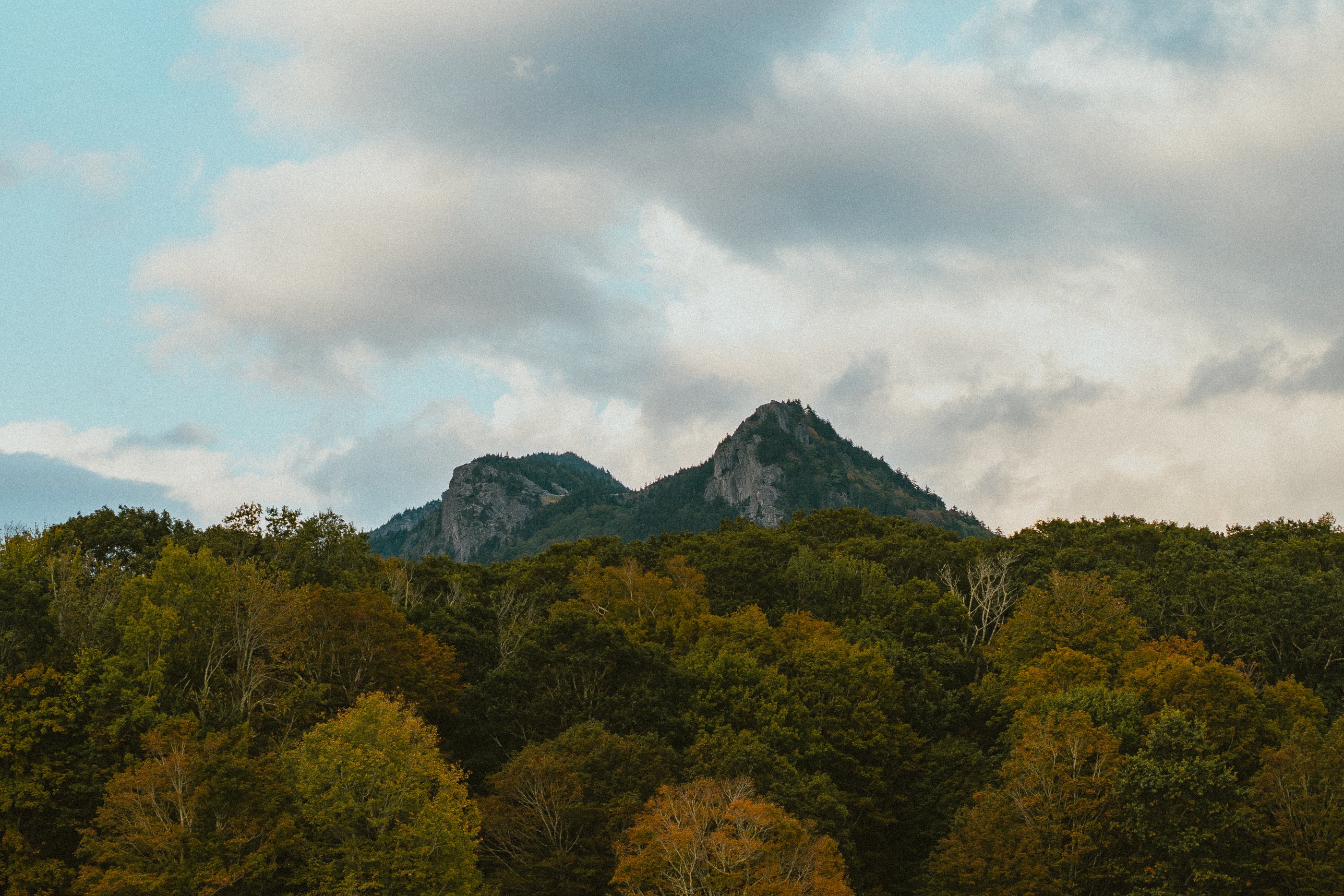
North Carolina has mountains everywhere. That does not mean it has every kind of mountain photograph.
For years I kept blaming myself when a beautiful overlook refused to become the photograph I had in my head. I would arrive at a huge view, put the camera up, and still feel like the frame had nowhere to go.
Eventually I realized the problem was not beauty. It was geometry.
A lot of Appalachian photography starts from the side or top of the mountain looking outward: ridge, ridge, ridge, sky. The view can be enormous, but the camera position is already decided for you. Move ten feet left and the relationship between the foreground and background barely changes.
The photographs I keep dreaming about work differently.
I want a dominant mountain that stays visible while I move around below it. I want a creek, flowers, rocks, snow, a road or a trail in the foreground. I want to walk left, right, forward and backward until those pieces line up with the mountain instead of simply pointing a camera at a view.
That is why the Rockies, the Canadian Rockies, Rainier, the Tetons and places like the Dolomites feel different to me. They give the photographer more compositional freedom.
That does not make Appalachia worse. It just means I should stop asking it to be something it is not.
The Blue Ridge gives me fog, forest, waterfalls, roads, layers, wet leaves, light rays and weather that changes a frame in minutes. Those things have become their own language in my photographs.
Maybe the better goal is not to make North Carolina look like somewhere else.
Maybe it is to get good enough here that, when I finally stand underneath one of those mountains I have been imagining for years, I already know what to do with it.